


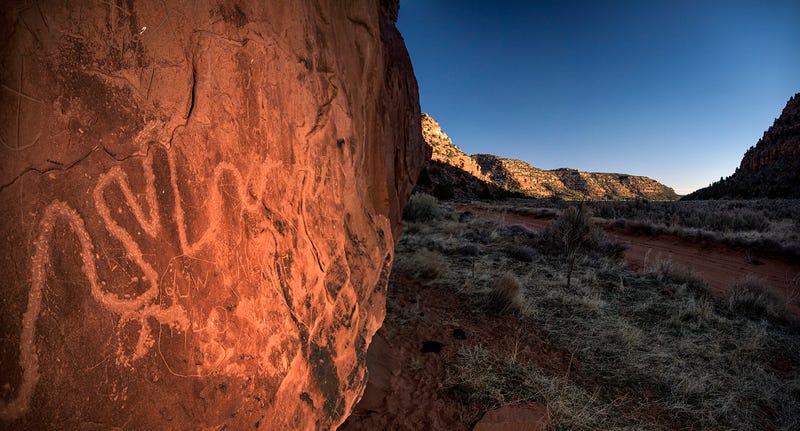
Environmental groups have sued President Donald Trump seeking to block his attempt to dismantle protections for the Bears Ears and Grand Staircase Escalante National Monuments in Utah.
Several filings submitted on Wednesday by a coalition of groups including the Natural Resources Defense Council, Earthjustice and clothing brand Patagonia told a federal judge in the U.S. District Court for District of Columbia that Trump simply does not have the authority to dismantle national monuments under the Antiquities Act.
“The gutting of these two monuments is yet another example of this administration rewarding industry with special access to the public’s land and resources,” Chris Krupp, public lands attorney for WildEarth Guardians, said in a statement.
That 1906 law allows presidents to establish protections for cultural and natural resources on federal lands, without a vote from Congress.
The law has been used by presidents of both parties to protect over 100 national monuments ranging from the 7.7-acre Stonewall National Monument in New York City to islands and reefs in the Pacific Ocean and rock paintings in ancient cliff dwellings in Utah’s Bears Ears.
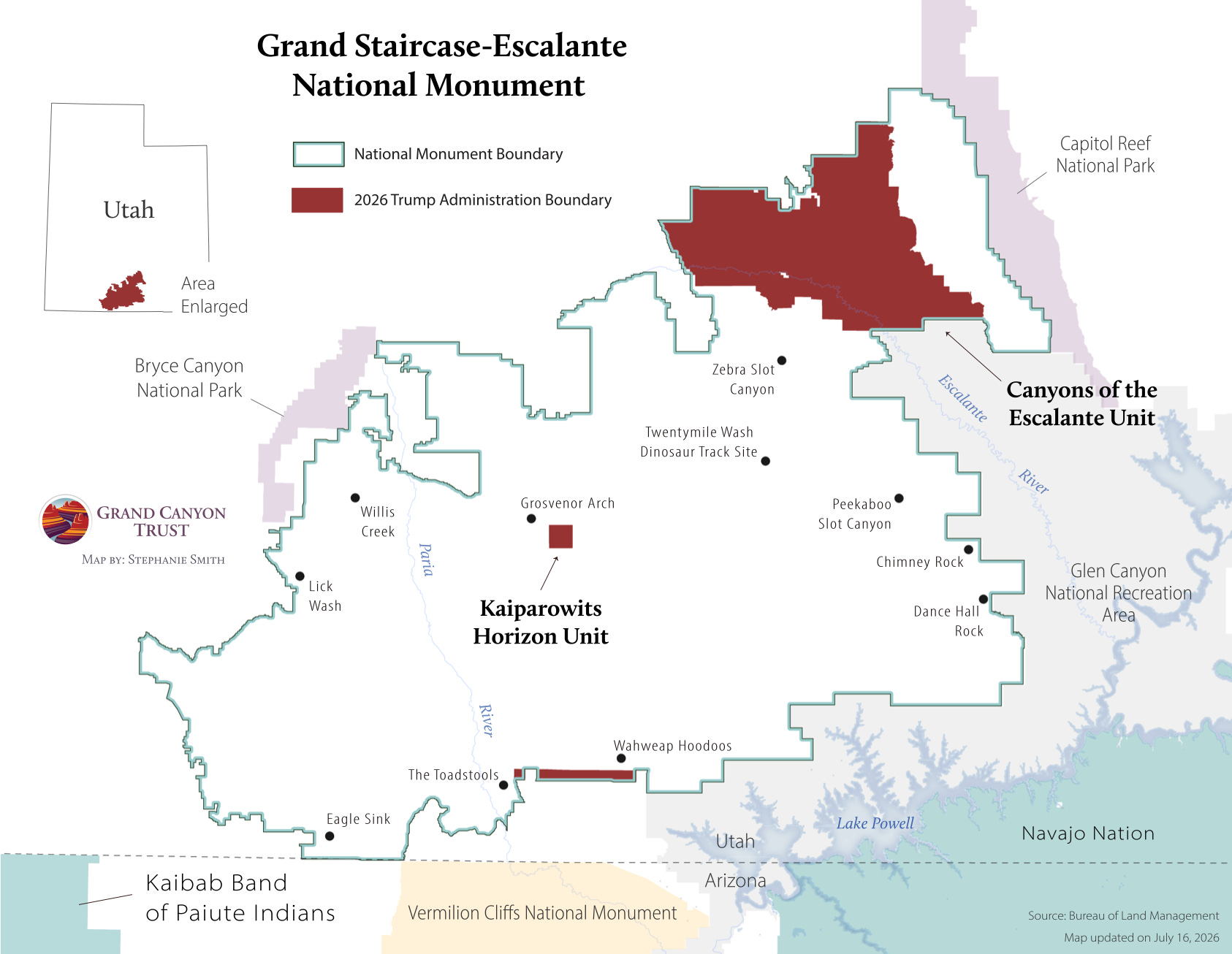
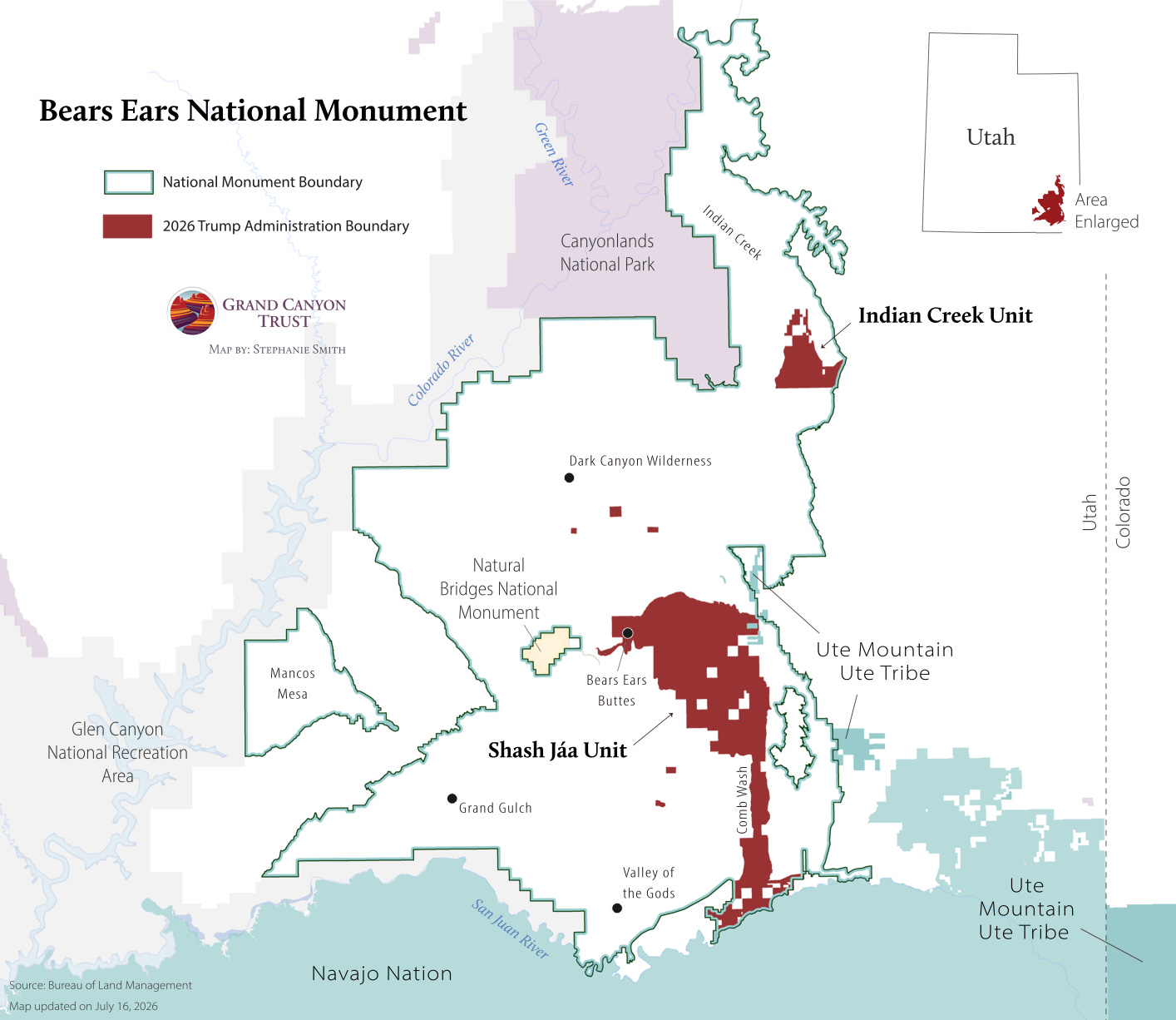
The proclamation signed by Trump in July reduced Bears Ears by 1.2 million acres, or 91%. Grand Staircase-Escalante was cut by 1.7 million acres, or 90 percent.
Challengers to Trump’s attempts to dismantle protections claim that the law does not include language that allows a president to remove protections, even if the law says protected lands “shall be confined to the smallest area compatible with the proper care and management of the objects to be protected.”
“I do think that the Antiquities Act is pretty clear that the act is a one way-ratchet. It’s for designation and expansion,” Susan Jane Brown, a lawyer at the law firm Silvix Resources, told Landmark for an earlier story. “It’s not to diminish the size of existing monuments.”
But the Trump administration has been laying the legal groundwork for a long time.
The Department of Justice released a legal memo last year saying that the president can abolish national monuments under the Antiquities Act. But that conclusion is hotly contested.
And there is at least one person with a lot of sway who might agree with the Trump administration: Supreme Court Chief Justice John Roberts.
In 2021 he wrote that the “smallest area compatible” restriction “has ceased to pose any meaningful restraint.”
“A statute permitting the president in his sole discretion to designate monuments ‘landmarks,’ ‘structures,’ and ‘objects’... has been transformed into a power without any discernible limit to set aside vast and amorphous expanses of terrain above and below the sea,” he wrote then.
The challengers also include the Southern Utah Wilderness Alliance and indigenous groups like the Utah Diné Bikéyah and the Hopi Tribe.
The Trump administration’s earlier efforts to shrink the monuments received support from the American Farm Bureau, and Republicans like Utah Gov. Spencer Cox have voiced support in recent months for the revamped effort.
Their litigation would reopen earlier cases that they filed after Trump tried to shrink the monuments during his first term. That litigation was stayed after former President Joe Biden reversed Trump’s first-term effort to reduce protections.