


Update: On Thursday, the Senate voted 50-49 to send a measure revoking mining prohibitions on U.S. forest land near the Boundary Waters Canoe Area Wilderness to President Donald Trump for a signature.
For over four decades, Paul Schurke has woken up before dawn in the frozen Minnesota wilderness, ready to get to work. As the sun rises above the southern edge of the boreal forest, Schurke brings food and water to a packed kennel of restless Canadian Eskimo dogs.
The trails upon which he guides dogsled tours through the Boundary Waters Canoe Area Wilderness, an expanse of forests and lakes that borders Canada where temperatures can dip to -40°F, are quiet.
But for the clank of the harnesses, panting and the sound of sled runners squeaking against the snow — a sound called a “shush” — visitors on sled dog adventures in the wilderness get to experience something rare in modern life: silence.
“You got a shush and a pant and a jingle going on all day long. Otherwise, it’s dead silent,” Schurke said.
That serenity is threatened by a controversial copper mine proposed by Twin Metals, a subsidiary of the Chilean conglomerate Antofagasta, that would tunnel under a lake and river just upstream from Schurke’s lodge.
While mining in the area is currently restricted by a 2023 order, congressional Republicans are moving to use a fairly obscure legislative tool called the Congressional Review Act to reverse those Biden administration-era restrictions and push the project toward the finish line.
Just over one year into President Donald Trump’s second term, a fight over the future of the region’s water quality — and its $13 billion recreation economy — has reignited.
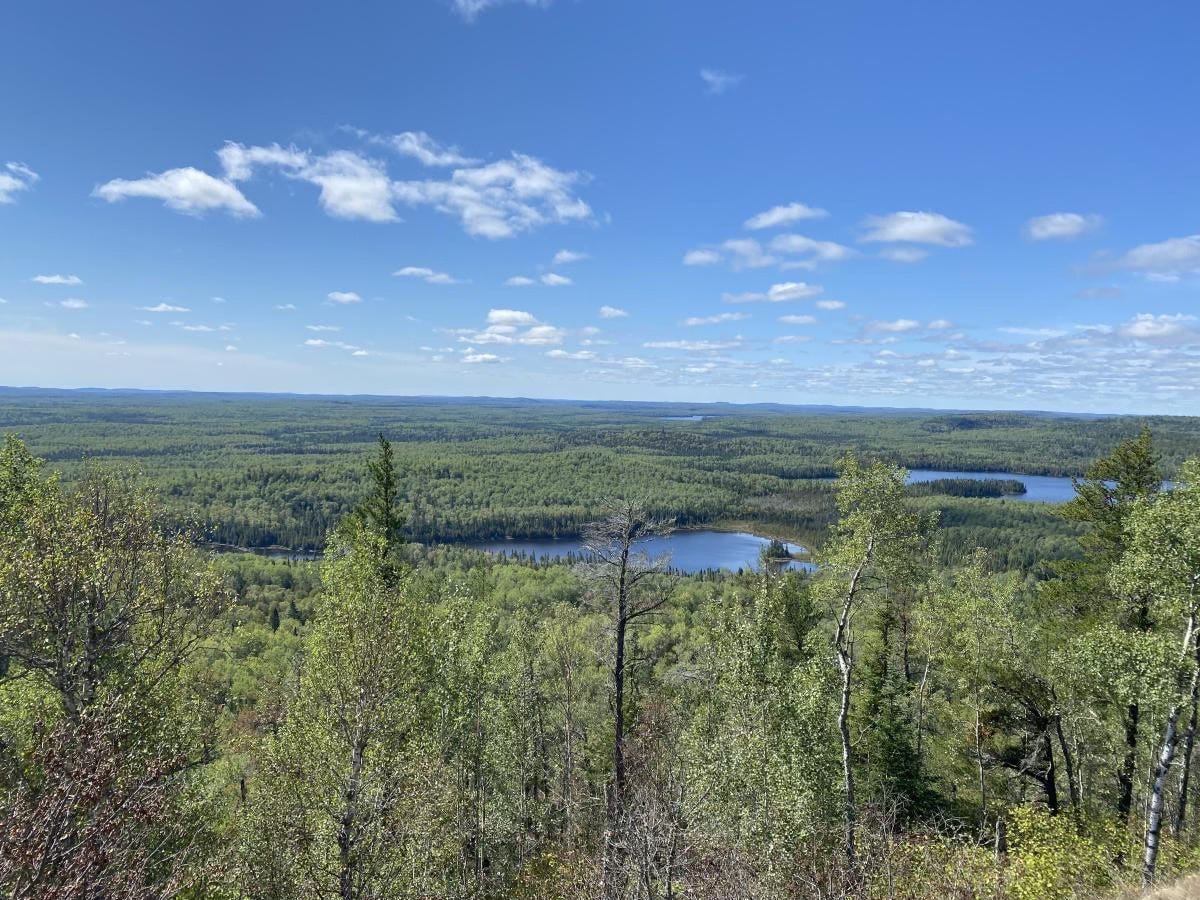
If built, the din of trucks and cracking rock would regularly pierce the solitude that Schurke’s clients come to enjoy. But the noise is just one of the many ways that adventure tourism business owners in northern Minnesota fear the mine could impact the region, which includes a protected expanse of 4.1 million acres with thousands of lakes that attract hundreds of thousands to hunt, fish, canoe, dogsled and camp each year.
The copper sulfide mine, originally proposed over a decade ago but delayed by opposition since, would cut into land just north of the start of a massive watershed that runs north into the Arctic Ocean, and just upstream of Schurke’s lodge. The waters in the lakes are so pristine that state environmental monitors say you can dip a cup in and drink it — but the mine threatens to dredge up minerals that would release the pungent smell of sulfuric acid and contaminate the water.
“There are 2,000 lakes within 15 miles of town and they’re all braided together in this vast maze of interconnected channels of rivers and streams,” Schurke said. “Any damage done to this water then percolates 1,200 miles across the north country.”
A blast from the past
The Senate debate that started up again on Wednesday night is taking place over 1,000 miles from Ely, a sleepy town of just over 3,000 people that serves as an entry point to the Boundary Waters. The proposed Twin Metals mine site sits just outside of that area in the Superior National Forest.
The Boundary Waters is visited by as many as 250,000 people a year, which makes it the most visited federal wilderness area in the country. It’s the kind of place people go to get lost from the world. Locals like to tell stories about the hikers and canoeists who, due to extended trips without access to phones or internet, remained blissfully unaware of the 9/11 terrorist attacks and the civil unrest in Minneapolis in 2020 after the murder of George Floyd.
But Ely, for all the Patagonia and North Face-wearing clientele it welcomes these days, is historically a proud mining town with mineral deposits running deep in its veins.
Pioneers arrived in the area in the mid-1800s in search of gold, but it was the iron ore under the soil that helped turn the town into a bustling community, according to longtime resident Bill Erzar.
Erzar comes from a long line of miners. His grandfather worked in the Zenith iron ore mine, which closed in the 1960s, for 45 years. His dad worked in the Pioneer mine after World War II, before it also closed in the late 1960s. Erzar worked in U.S. Steel’s Minntac mine, about an hour’s drive south of Ely.
These days, Erzar thinks back fondly on the days when the mines were bustling. Ely had numerous movie theaters, grocery stores, women’s clothing stores and lumber yards. Kids would wander the main street on summer nights. There were plenty of restaurants that young couples would flock to for date night.
Ely, to hear Erzar recall of his childhood, was something akin to the set of a nostalgic post-war Americana film.
“Heck, in the summertime, there were kids walking up and down Main Street from all the way down by the Dairy Queen, back and forth,” he said. “We walked from the Dairy Queen or root beer stand up to the state theater. We’d walk a couple times a night if we didn’t have a vehicle.”
And it’s that vision of the past that makes Erzar a supporter of the Twin Metals mine. In his view, Ely could use an economic engine — and he’s confident the environmental harms that his neighbors like Schurke worry about can be managed.
“Our economy here is in pretty big trouble. Ely used to have a population of nearly 6,400 people. There used to be 1,775 kids in the school system when I was in school. Right now, I think we’re at 490,” he said.
A lobbying blitz
Twin Metals got close to starting construction on the project in 2019, when the first Trump administration reversed an Obama-era denial of lease applications for the area and renewed Twin Metals’ leases.
The American subsidiary and its Chilean parent company have spent roughly $7.7 million on lobbying since 2020, according to the nonprofit OpenSecrets. They say that the mine will create 750 jobs directly, and help sustain another 1,500 in the community indirectly.
But opponents of the project aren’t convinced that the jobs will make up for the harms caused to a local economy that has grown to rely on out-of-towners renting snowshoes and canoes.
A 2020 Harvard study analyzing the expected impacts of the Biden administration’s 20-year-ban on mining in the area found that the mine would put 4,490 existing local jobs at risk, and threaten growth in an economic sector that is expected to bring in between 5,000 and 23,000 more jobs in coming decades.
And the mine owner’s commitment to environmental protection has been questioned by opponents, who note the parent company was fined $775,000 by the Chilean government earlier this year for failing to comply with water management regulations at another coppermine it owns.
On Wednesday night, the Boundary Waters area became the latest battlefront in the Trump administration’s sustained attacks on public lands when the Senate picked up a measure originally introduced by Republican Rep. Pete Stauber in the House, which voted to advance the measure in January. Stauber represents the congressional district that spans northern Minnesota.
The bill Stauber introduced makes use of a little-known legislative tool that is generally intended to give a new Congress the ability to reverse rules passed by federal agencies within a certain time frame. But the new use of the tool for a public lands decision has drawn protests from environmentalists and public lands advocates who say using it a year into a congressional term sets a dangerous precedent that could undermine public lands across the country.
While Republicans had hoped to have a vote on the measure Wednesday night, Democratic Sen. Tina Smith derailed the effort, holding the floor for hours. She said she would do so to give her colleagues “every opportunity to change their minds and do the right thing.”
“This is a special place beloved by Minnesota and the country, and this mine poses an unacceptable threat. We can mine responsibly here in the United States to access the critical minerals we need. But this mine, in this place, using this unprecedented process, is not the way to do it.”
Schurke said he will live with the consequences of the Senate’s vote for years, even if the impact from the pollution may take time. He said opening up the mine is something akin to a “Pandora’s box” that will continually cause harm in the area for years to come.
“It’s going to take a while for the sulphuric acid to percolate into the watershed, and that’s a gift,” he said. “But I’m going to notice the sound and the light pollution and the dust pollution. All that will be immediate.”