


Landmark is trying out a new, digestible format this week. We’re leading with a main story, followed by a few short items on notable cases filed this week. We would love to hear your thoughts on the format.
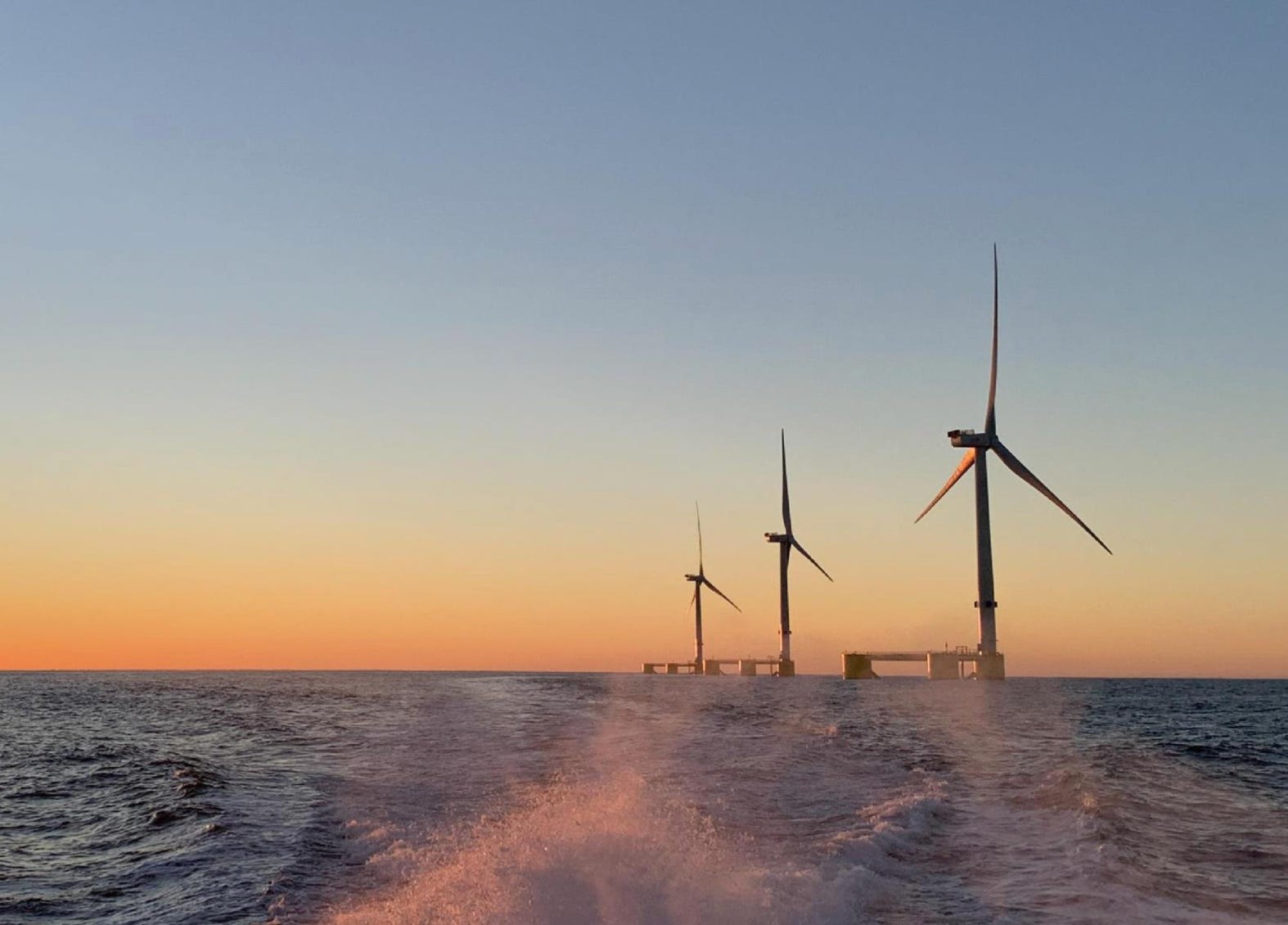
Lawsuits challenging the Trump administration’s latest strategy to kill American offshore wind by paying off developers to walk away from projects are starting to pile up, with California now leading the latest pushback against what its top lawyer called a “backroom buyout.”
The state’s lawsuit filed Friday asked a judge in the U.S. District Court for the Northern District of California to block a settlement in which the U.S. Interior Department agreed to pay developer Golden State Wind approximately $120 million to drop its plans to build a wind farm in federal waters off the state’s Central Coast.
It is the second lawsuit filed by state attorneys general challenging similar deals to thwart offshore wind production, and several more are expected in the coming months.
It will test not only whether the deal violates laws like the Coastal Zone Management Act, the Outer Continental Shelf Lands Act and the Administrative Procedure Act, but also the limits of Trump’s ability to unilaterally use funds set aside by Congress to settle legitimate claims against the government to further his own policy goals.
“To date, Federal Defendants have entered into nearly $4 billion in offshore wind lease buyouts. By using collusive settlement agreements to turn the Judgment Fund into an uncapped discretionary spending account, directing billions of dollars toward executive priorities never approved by Congress, Federal Defendants have effectively arrogated to themselves Congress’s power of the purse.”
-California’s lawsuit against the Interior Department
The settlement required Golden State Wind to reinvest that money into oil and gas energy projects in the Gulf Coast. California Attorney General Rob Bonta called it an “outrageous abuse of taxpayer dollars to abandon offshore wind investments that could have delivered union-paying jobs and reliable clean energy to Californians.”
“The Trump Administration’s backroom buyout with Golden State Wind to stop offshore wind development in favor of gas and oil drilling is, unfortunately, a classic playbook for them to line the pockets of their Big Oil donors,” Bonta said.
The agreement between Interior and Golden State Wind was announced in April, and was one of a handful of deals in which President Donald Trump’s administration announced it would pay offshore wind developers to walk away from projects and reinvest federal settlement dollars in fossil fuel, nuclear or geothermal energy projects.
The administration has said that windmills in the ocean jeopardize national security, but those concerns were already rejected by judges who have issued preliminary injunctions blocking stop-work orders for five projects issued by the government against windmills citing similar concerns.
Trump has been a vocal opponent of offshore wind throughout his time in the political sphere, and has repeatedly mocked the threat of climate change. During his time in office, he has signed executive orders encouraging the development of American fossil fuels including liquefied natural gas (LNG) and coal.
“I can proudly say that we have not approved one windmill since I’ve been in office and we’re gonna keep it that way,” Trump said in January before the deals were announced. “My goal is to not let any windmill be built, they’re losers. They lose money, they destroy your landscape, they kill your birds, they’re all made in China.”
The president’s anti-wind stance has helped generate huge paydays for the president’s donors. The Washington Post has reported that the majority of a $1.2 billion settlement in which German energy giant RWE agreed to give up offshore wind leases in New York, California and Louisiana in favor of oil, gas or nuclear “conventional energy” projects will be spent to buy a $900 million stake in a Louisiana LNG project from the president’s Mar-a-Lago neighbor Michael Dorrell.
California’s lawsuit came after New York and six other states in the Northeast sued the Trump administration over its $928 million deal with TotalEnergies.
Bonta said that not only does the deal jeopardize thousands of jobs in his state, it also puts voter-approved climate bonds and millions of investments in clean energy production at risk. California has some of the highest residential electricity rates in the U.S., and is seeing a huge spike in demand as the state transitions to electric vehicles and works to address its climate goals.
Here’s what else was filed this past week:
Alaska Native communities challenge Forest Service’s approval of ‘extensive logging’ of old growth forests in the Tongass
The Ketchikan Indian Community, the Center for Biological Diversity and the Southeast Alaska Conservation Council sued the U.S. Forest Service over its authorization of “extensive logging across thousands of acres” of mostly old growth trees in the Tongass National Forest.
The groups asked the court to vacate the Final Environmental Impact Statement and Record of Decision for the South Revilla Integrated Resources Project, a 15-year project approved in July that the government said could yield up to 83 million board feet of timber.
The plaintiffs said that logging and roadbuilding authorized by the project would harm subsistence living practices, clearcut recreation areas and harm wildlife habitat for salmon, deer, goshawk, wolves, marten and black bears. They also said that removing the old growth trees reduces the Tongass’ carbon storage capacity and watershed protections.
The lawsuit alleged violations of the National Forest Management Act, the Alaska National Interest Lands Conservation Act and other laws.
– Ketchikan Indian Community v. United States Forest Service (1:26-cv-00017 — U.S. District Court for the District of Alaska). Complaint.

Oklahoma residents challenge Trump administration’s jump-first-ask-questions-later approach to aluminum smelter approvals
Four Oklahoma residents who live within a mile of a planned aluminum smelter approved by the U.S. Department of Energy sued the agency alleging it unlawfully used a categorical exclusion under the National Environmental Policy Act (NEPA) to approve the first new primary aluminum smelter in the United States since 1980.
The residents alleged that the federal government approved and reviewed the smelter before a site had been chosen for it — and thus before the environmental and health impacts could be reviewed — and said that construction must be stopped before the company can sink money into the project.
The lawsuit follows after Oklahoma Attorney General Gentner Drummond sued the project’s developers, including a company partly owned by United Arab Emirates (UAE) sovereign wealth funds, arguing that the project risks polluting water and air and would contrast with the UAE’s own policy of restricting smelter building to designated industrial zones.
The lawsuits specifically cited concerns around the threat of airborne fluoride emissions, which can cause fluorosis and contaminate farms and make livestock sick.
– Hill et al. v. United States Department of Energy et al., (4:26-cv-00534 — U.S. District Court for the Northern District of Oklahoma). Complaint. Oklahoma state litigation docket.
Lawsuit claims Mexican spotted owls threatened by Arizona copper mine exploration
The Center for Biological Diversity, the San Carlos Apache Tribe and the Lower San Pedro Watershed Alliance sued the U.S. Fish and Wildlife Service and the U.S. Bureau of Land Management (BLM), challenging the so-called Copper Creek Exploration Project.
The project authorizes a network of 67 drill pads to search for copper near Tucson, and would draw 70,000 gallons of groundwater per month per drill rig.
The groups alleged that BLM ignored photographic evidence that the imperiled Mexican spotted owl is found in the area, and refused to consider the impact of the water usage on the San Pedro River and the threatened western yellow-billed cuckoo that nests along the river.
The lawsuit sought an order that would force the government to conduct a more thorough environmental analysis of the project, while declaring that Fish and Wildlife and BLM violated the Endangered Species Act, NEPA, the National Historic Preservation Act and the Administrative Procedure Act.
– Center for Biological Diversity et al. v. U.S. Fish and Wildlife Service et al. (4:26-cv-00434 — U.S. District Court for the District of Arizona). Complaint.
Nevada sues over Colorado River water allocation plan
Nevada sued the Interior Department over an Aug. 21 record of decision that it said would reduce its current allocation of Colorado River water by over 70%, while Upper Basin states see no reduction in their allocation.
The record of decision would also cut the allocation for Arizona and California, the lawsuit alleged. Las Vegas and surrounding cities would receive less than 86,500 acre-feet per year, despite using approximately 200,000 acre-feet in 2024.
The Colorado River and its reservoirs supply water to about 40 million people and 30 tribes across seven states, but is drying up as a result of climate change, reduced snowpack and overuse from the growing population and agriculture out West. Interior’s record of decision came after over two years of negotiations between the Bureau of Reclamation and the seven basin states. It laid out a plan for just the next two years, but further cuts could be coming.
– Nevada et al. v. Burgum et al. (2:26-cv-02665 — U.S. District Court for the District of Nevada). Complaint.